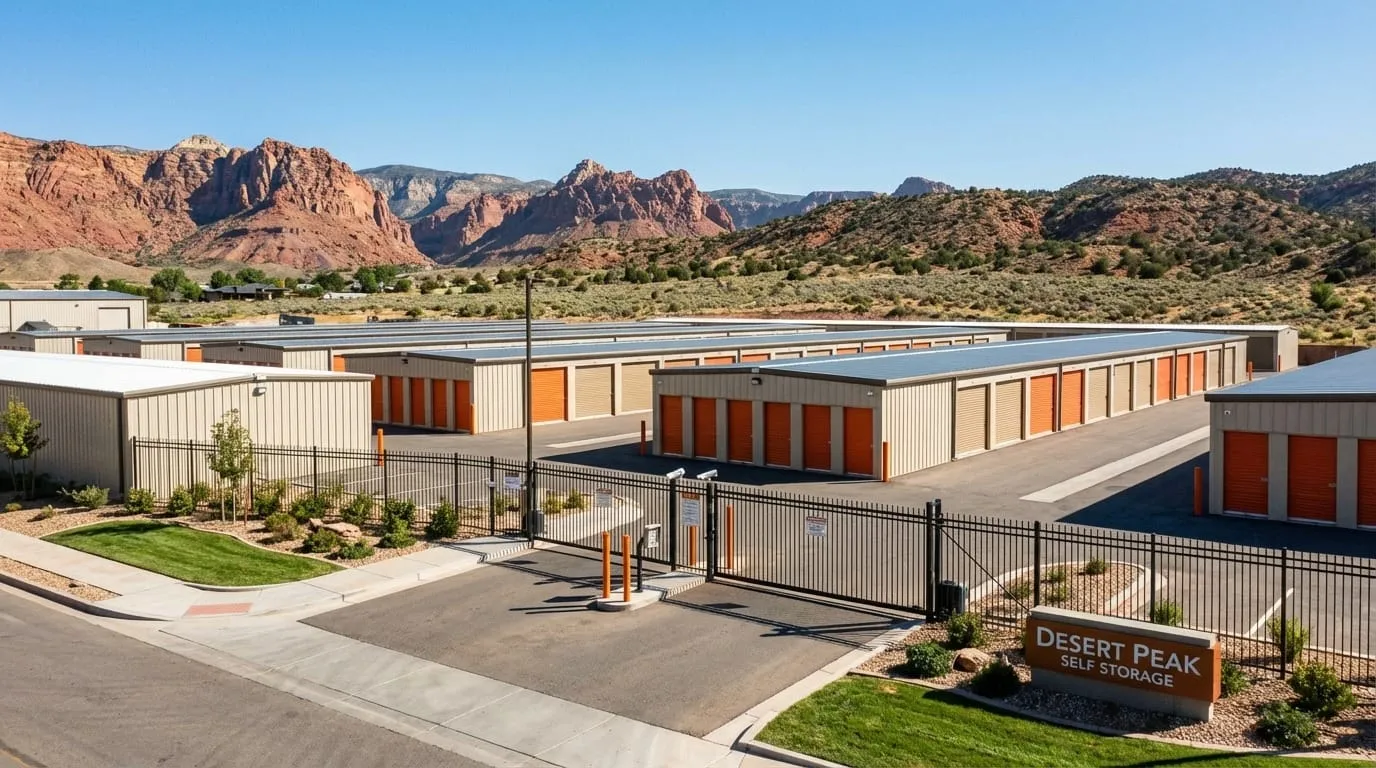
Storage Units Northern Utah
Self-Storage Facility Construction for the Growing Wasatch Front
Northern Utah added over 37,000 new residents between 2023 and 2024, and that growth drives demand for storage. Cherrywood Construction builds self-storage facilities engineered for this region's climate extremes—from temperature-controlled buildings that protect belongings during sub-zero winters to drainage systems that handle spring snowmelt.
Get Free Storage Units QuoteSelf-Storage Construction for Northern Utah's Growing Communities
The self-storage industry in Northern Utah reflects the region's population dynamics. Nearly 80% of Utah's 3.5 million residents live along the Wasatch Front corridor stretching from Ogden through Salt Lake City to Provo, and this concentration creates strong demand for storage facilities. Utah County alone is projected to add 370,000 households over the next 40 years. At Cherrywood Construction, we build storage facilities designed to serve these growing communities—from small neighborhood facilities to large multi-building developments.
Constructing storage units in Northern Utah requires attention to climate factors that generic building approaches overlook. Utah experiences temperature swings exceeding 40°F in a single day, with winter lows regularly dropping below 10°F and summer highs reaching into the upper 90s. Climate-controlled storage buildings must maintain temperatures between 55-80°F and humidity below 55% year-round to protect furniture, electronics, documents, and other temperature-sensitive items. Our facilities incorporate proper HVAC sizing, vapor barriers, and insulation systems calibrated for Utah's demanding conditions.
Site work for storage facilities along the Wasatch Front presents specific challenges. The region's clay soils in many areas expand and contract seasonally, affecting pavement and building foundations. Spring snowmelt and occasional heavy thunderstorms require robust drainage infrastructure to prevent flooding and maintain access. We design sites with proper grading, storm water management, and pavement sections appropriate for the traffic loads storage facilities generate—including the heavy vehicles used during initial tenant move-ins.
Security infrastructure has become a baseline expectation for modern self-storage facilities. Today's tenants expect gated access, surveillance cameras, individual unit alarms, and well-lit drive aisles. We integrate these systems during construction rather than retrofitting them later—running conduit, installing mounting points, and coordinating with security vendors to ensure complete coverage. Our facilities also accommodate management offices, which Utah zoning typically requires for storage developments.
Storage Unit Construction in Northern Utah
Climate Control Requirements
Salt Lake City's climate presents a storage challenge that facilities in milder regions don't face. Temperatures can exceed 100°F in summer and drop to 21°F or lower in winter—a 80+ degree annual range. Humidity fluctuates seasonally, with dry conditions in summer and moisture from winter storms. Climate-controlled storage buildings need HVAC systems that can handle both heating and cooling loads, dehumidification during wet periods, and proper air circulation to prevent stagnant conditions that cause mold and material deterioration. We size systems based on actual Utah weather data rather than generic assumptions.
Wasatch Front Population Growth
The Wasatch Front absorbed over 70% of Utah's growth in 2024, with Salt Lake, Utah, Davis, and Weber counties adding approximately 37,000 residents. Utah County leads in growth percentage, with cities like Saratoga Springs (7.9% growth) and Highland (7.8% growth) among the fastest-expanding communities. This concentrated population growth creates sustained demand for storage—new residents downsizing from larger homes, families needing seasonal item storage, and businesses requiring inventory space. Storage facilities positioned in growth corridors benefit from this demographic momentum.
Seismic and Structural Requirements
The Wasatch Fault runs directly beneath Northern Utah's population centers, placing storage facilities in Seismic Design Category D. While storage buildings typically have lower occupancy loads than other commercial structures, they still require proper lateral force resistance, anchor bolt specifications, and connection details that satisfy Utah building codes. Steel-frame storage buildings need appropriate bracing configurations, and concrete block or tilt-up construction requires reinforcement per seismic requirements. These factors affect construction costs compared to non-seismic regions.
Zoning and Permitting Across Jurisdictions
Self-storage zoning varies significantly across Northern Utah municipalities. Many cities allow storage facilities only in manufacturing or commercial zones, and some require conditional use permits. West Valley City limits storage facilities to Manufacturing zones and caps caretaker dwellings based on facility size. Salt Lake County, Davis County, and individual cities each have different setback, landscaping, and access requirements. We navigate these variations regularly and understand what each jurisdiction requires—helping identify suitable sites and move projects through approval efficiently.
Storage Facility Types for Northern Utah
Our expert contractors specialize in all types of storage units projects.
Climate-Controlled Storage Buildings
Fully enclosed buildings with HVAC systems maintaining temperatures between 55-80°F and humidity below 55%. Essential for protecting furniture, electronics, documents, photographs, and other items sensitive to Northern Utah's temperature extremes.
- Interior corridors with individual unit doors
- HVAC systems sized for Utah's climate
- Vapor barriers and proper insulation
- Individual unit ventilation where needed
- Fire suppression systems per code
- Energy-efficient building envelope design
Drive-Up Storage Units
Single-story metal buildings with individual roll-up doors providing vehicle access to each unit. Popular for tenants storing larger items, vehicles, or equipment who need convenient loading and unloading.
- Individual roll-up doors per unit
- Concrete drive aisles for vehicle access
- Various unit sizes from 5x5 to 10x30+
- Roof overhangs for weather protection
- Exterior lighting and security cameras
- Proper drainage between building rows
Multi-Story Storage Facilities
Two or three-story buildings maximizing storage density on limited land. Common in higher-cost locations along the Wasatch Front where land values justify vertical construction.
- Elevator and stair access to upper floors
- Loading areas on each level
- Climate control throughout
- Fire-rated construction as required
- Structural systems for upper floor loads
- Efficient floor plate layouts
RV, Boat & Vehicle Storage
Covered or enclosed storage for recreational vehicles, boats, trailers, and other large items. Northern Utah's outdoor recreation culture drives demand for seasonal storage of watercraft and RVs.
- High ceilings for RV heights
- Wide drive aisles for maneuvering
- Electrical hookups where needed
- Covered canopy or fully enclosed options
- Security fencing and gate access
- Dump station and wash bay options
Our Storage Facility Development Process
Site Analysis & Feasibility
We evaluate potential sites for zoning compatibility, access, utilities, and soil conditions. We assess local storage market competition and demand drivers—population density, housing types, and growth trends—to help determine appropriate facility size and unit mix.
Design Development
Working with your requirements and the site's constraints, we develop a facility layout including building placement, drive aisles, drainage, and parking. We optimize unit mix based on market demand and incorporate climate control, security infrastructure, and management office requirements.
Engineering & Permitting
Structural engineers design buildings for Northern Utah's snow loads and seismic requirements. Civil engineers address drainage and site work. We prepare permit applications and coordinate plan review with local building departments—each jurisdiction has different requirements and review processes.
Site Work & Foundations
Site preparation includes clearing, grading for proper drainage, utility installation, and storm water infrastructure. Foundations are poured with footings extending below the 30-inch frost line, anchor bolts placed per engineering specifications, and slabs designed for the building loads above.
Building Construction
Steel-frame buildings are erected, roofed, and enclosed. Climate-controlled buildings receive HVAC systems, insulation, and interior finishes. Unit partitions, roll-up doors, and corridor systems are installed. Electrical, fire protection, and security rough-in proceed concurrently.
Completion & Security Integration
Final details include paving, landscaping, signage, and site lighting. Security systems—gate access, cameras, unit alarms—are installed and commissioned. Management office and any amenities are completed. We coordinate final inspections and turnover.
Licensed & Insured
- • Utah licensed general contractor
- • Fully bonded and insured
- • Workers compensation coverage
- • Liability insurance protection
- • Building code compliance
Quality Assurance
- • Regular quality inspections
- • Premium materials and suppliers
- • Skilled local craftspeople
- • Warranty protection included
- • Third-party inspections coordinated
STORAGE UNITS THROUGHOUT NORTHERN UTAH
We provide storage units services across the Wasatch Front and Wasatch Back. Our local expertise means we understand the unique requirements of each community.
RELATED SERVICES
Explore our other construction and remodeling services throughout Northern Utah.
Storage Units Northern Utah FAQ
Common questions about storage facility construction in Northern Utah
Storage facility construction costs in Northern Utah vary by type and finish level. Basic drive-up storage buildings run $25-40 per square foot for the buildings themselves. Climate-controlled facilities cost $50-75 per square foot due to HVAC, insulation, and interior corridor requirements. Site work, foundations, paving, and security infrastructure add $15-30 per square foot depending on site conditions. Multi-story buildings cost more due to structural requirements and elevators. Total project costs typically range from $45-100+ per square foot, depending on the facility type. We provide detailed estimates based on your specific project and site.
Self-storage facilities are typically allowed in commercial, manufacturing, or industrial zones—but requirements vary significantly by jurisdiction. Many cities require conditional use permits that involve public hearings. Some areas have restrictions on storage facility proximity to residential zones, sign heights, landscaping buffers, and architectural standards. Salt Lake City, West Valley City, Sandy, and other municipalities each have different requirements. We help identify sites where storage is permitted and navigate the approval process in each jurisdiction.
Climate control isn't legally required, but Utah's temperature extremes make it essential for protecting many stored items. Without climate control, interior temperatures can exceed 100°F in summer and drop below freezing in winter. Wood furniture warps, leather cracks, electronics suffer thermal damage, and documents deteriorate. Climate-controlled units maintaining 55-80°F and controlled humidity command higher rental rates and attract tenants with valuable belongings. Most new facilities include at least some climate-controlled inventory.
Today's storage tenants expect comprehensive security: perimeter fencing with controlled gate access, surveillance cameras covering drive aisles and corridors, individual unit alarms that detect unauthorized entry, adequate lighting throughout the facility, and on-site management or monitoring. Some facilities add individual unit door cameras, license plate recognition at entry gates, and smart lock systems tenants can control via smartphone. We integrate security infrastructure during construction—running conduit, installing mounting points, and coordinating with security vendors—rather than retrofitting it later.
Construction timeline depends on facility size and complexity. Permitting in Northern Utah typically takes 2-4 months depending on the jurisdiction and whether conditional use approval is required. Site work and foundation construction takes 4-8 weeks. Building construction takes 3-6 months for a typical single-story facility, longer for multi-story or large developments. Total project duration from land acquisition to opening is typically 12-18 months. Phased development allows opening initial buildings while constructing later phases.
We build storage facilities throughout Northern Utah including Salt Lake County, Utah County, Davis County, Weber County, Box Elder County, Cache County, and Summit County. This includes Salt Lake City, West Valley City, Sandy, Draper, Lehi, Saratoga Springs, Ogden, Layton, Logan, and surrounding communities. Each jurisdiction has different zoning requirements, and our experience across the region means we understand what each municipality requires for storage development.
READY FOR YOUR STORAGE UNITS?
Get a free estimate for your storage units project. Fast, safe, and professional service guaranteed.